Parashat Nitzavim Vayelech
Question
A Gutten Erev Shabbos!
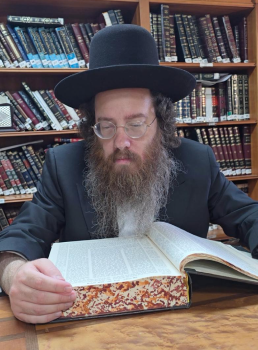
We are now in the month of Elul, the month of mercy and forgiveness. Be’ezras Hashem, this Sunday we begin saying Selichos, according to the Ashkenazi custom. As we approach the Day of Judgment, we asked Morienu, HaGaon HaRav Amrom Fried shlit”a, to share some words of encouragement and advice for these holy days, for the benefit of our readers.
The Rav’s response: We are commanded to do teshuvah, but this is very difficult. Teshuvah involves more than simply saying Vidui; it requires a deep and sincere sense of regret.
One way to merit a favourable judgment is to become part of the community. We do this by attending shiurim regularly, thereby encouraging and strengthening others, because each person’s absence affects everyone.
Another way is to forgive those who have hurt us. Chazal teach (Rosh Hashanah 17a): “Whoever overlooks the wrongs done to him is forgiven for all his sins.” When a person lets go of resentment towards those who have wronged him and forgives them, Hashem, in turn, will forgive him.
This week’s sheiloh is on the subject of Teshuvah:
It is written in this week’s parashah: “And you will return to Hashem, your G-d, and listen to his ‘voice’ , according to everything that I command you today, you and your children, with all your heart and with all your soul.”
The Gemara in Maseches Pesachim (54a) teaches: “Seven things were created before the world was created. They are: Torah, teshuvah, Gan Eden, Gehinnom, the Kisei HaKavod, the Beis HaMikdash and "the name of Mashiach
Why did Hashem create teshuvah before He created the world? Could He not have created it after the world had already been created?
Answer
Be’ezras Hashem, I found an explanation in the Tzlach’s commentary on this Gemara and from his answer, we can understand the tremendous power of teshuvah:
This is a quote from the Tzlach; “Seven things were created before the world was created. They are: the Torah, teshuvah, etc.” It appears to me that we can explain what it means that teshuvah had to be “created.” Certainly, this statement contains deep secrets concerning matters that stand at the highest levels of the world. “Who is wise and will understand this, and who possesses understanding and will comprehend it?” Nevertheless, it appears to me that it could be explained as follows. It is well known that man’s roots are on the earth, while his branches reach the highest levels of Heaven. Everything a person does, whether good or otherwise, makes an impression Above. Through his actions, a person can, chas veshalom, cause damage to the higher spiritual attributes. In His great mercy, when Hashem arranged these spiritual attributes, which certainly took place before the creation of this physical world, he arranged them with such wisdom that even if they would be damaged, chas veshalom, through the actions of people below, the damage would not cause complete destruction (of these worlds). Instead, it would only cause them to descend from their level. Therefore, when a person repents and regrets the wrong that he has done, the affected spiritual attribute can return and rise to its original place. This is what Chazal mean when they say that teshuvah was created before the world. Hashem arranged the spiritual attributes in such a way that they would be able to return and rise once again.”
We can see from the holy words of the Tzlach the tremendous gift that Hashem placed into Creation called Teshuvah, that even before the world was created, he made it possible for every Jew, regardless of his situation, to return through teshuvah and repair all the spiritual worlds that he may have damaged, chas veshalom.
We find another remarkable idea in the words of Rabbeinu Chananel. However, I would like to first introduce the words of the Tur regarding the blessing of teshuvah (Hashiveinu Avinu L’Torasecha) in Shemoneh Esrei.
According to every nusach, this blessing contains fifteen words. What is the significance of the number fifteen in connection with teshuvah? Why did Chazal compose this blessing with exactly fifteen words?
The Tur writes: It contains fifteen words, corresponding to the fifteen words in the pasuk: “Let the wicked person abandon his way, and the sinful man his thoughts; let him return to Hashem, and He will have mercy upon him, and to our G-d, for He is always ready to forgive” (Yeshayahu 55). Teshuvah is so great that it reaches all the way to the Kisei HaKavod. The distance from the earth to the first of the upper worlds is a journey of five hundred years, and each world itself is also a journey of five hundred years. The same applies to the distance between each of the upper worlds. Altogether, there are seven worlds and seven spaces between them, with the Kisei HaKavod above them, which teshuvah reaches, making a total of fifteen.
The blessing begins with the letter hei and ends with the letter hei. Together, their numerical value is ten, corresponding to the Ten Days between Rosh Hashanah and Yom Kippur, which are especially designated for those who wish to do teshuvah. From this world until the Kisei HaKavod, there are fifteen levels to ascend. The number fifteen therefore represents the greatness of teshuvah, which reaches all the way to the Kisei HaKavod.
Rabbeinu Chananel (Yoma 86b) explains that this does not only mean that teshuvah reaches the Kisei HaKavod. It also means that teshuvah can repair even the most severe aveiros, sins that reached the Kisei HaKavod because of their severity.
Rabbeinu Chananel writes: “Teshuvah is so great that even if a person’s sin reached the Kisei HaKavod, his teshuvah can bring atonement, as it says: ‘Return, Yisrael, until Hashem, your G-d.’”
On behalf of the Sheilot website staff, we wish you a Shabbos Shulem umevorach and a kesiva vechasimah tovah.